
What is AI Powered Site Search?
January 12, 2025
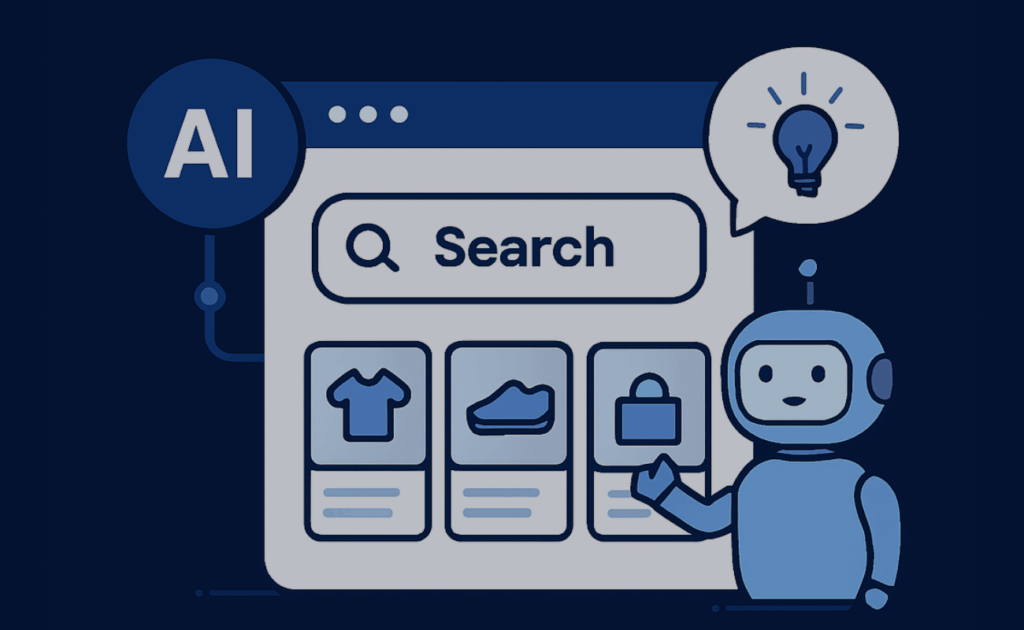
Searching shouldn’t feel like a guessing game. AI-powered site search transforms every query into an opportunity, understanding what users mean, not just what they type, to deliver results that truly match their intent. By delivering highly relevant, personalized results, AI site search not only improves the customer experience but also drives engagement, product discovery, and conversions for businesses of all sizes.
What is AI Powered Site Search?
AI Powered Site Search is an intelligent search experience that uses artificial intelligence and machine learning to understand what users mean, not just what they type. Instead of relying solely on exact keyword matches, AI-powered search leverages technologies like natural language processing (NLP), machine learning, and semantic understanding to deliver more relevant, personalized results.
Here are some key differences between traditional site search and AI powered search:
- Keyword match vs. intent understanding: Traditional site search uses manual keyword matching to try to find relevant products for the consumer, whereas AI search understands the context behind the search, delivering results that match the customer’s preference and intent.
- Manual rule writing vs. continuous improvement: Traditional search relies on constant manual updates to keywords, synonyms, and misspellings to capture changing consumer trends. AI search continuously improves over time to capture what users want in real-time
- Limited vs. dynamic personalization: Site search typically delivers the same results to every user, regardless of their behavior, preferences, or past interactions. AI search adapts results dynamically for everyone, considering browsing history, past purchases, location, and other contextual signals.
For example, a user searching for “outfit for a summer wedding” doesn’t need a page that contains that exact phrase. An AI-powered site search engine understands the intent behind the query and can return dresses, accessories, and recommendations appropriate for the occasion, season, and even the user’s past preferences. It is a dynamic, self-optimizing tool that helps users find what they’re looking for faster while driving better engagement and conversions for businesses.
How AI Powered Site Search Works
AI-powered site search combines multiple artificial intelligence technologies to deliver fast, relevant, and increasingly personalized results. While the underlying models can be complex, the process typically follows a few key steps.
1. Context Indexing and Data Ingestion
First, the search system ingests and indexes your site’s content, such as products, pages, blog posts, metadata, and structured attributes. AI-powered search platforms go beyond basic indexing by understanding relationships between content types, categories, and attributes, creating a richer data foundation for search.
This ensures the search engine isn’t just reading text but understanding how different pieces of content connect across your site.
2. Query Understanding and Intent Detection
When a user enters a search query, AI powered site search uses natural language processing to interpret the meaning behind the words. This includes:
- Identifying intent (informational, navigational, or transactional).
- Recognizing synonyms and related concepts.
- Handling misspellings, abbreviations, and conversational phrases.
- Understanding context, such as modifiers like “best,” “under $50,” or “for winter.”
Rather than treating every query as a string of keywords, the system evaluates what the user is actually trying to accomplish.
3. Semantic Matching and Relevance Ranking
Once intent is understood, the search engine uses semantic search techniques to match the query with the most relevant content. Machine learning models evaluate multiple relevance signals (content similarity, popularity, freshness, and past performance) to rank results dynamically.
This allows AI powered site search to surface results that may not contain exact keywords but are still the best match for the user’s needs.
4. Personalization and Contextual Signals
Many AI powered site search solutions incorporate personalization by factoring in contextual data, such as:
- Past searches and clicks
- Browsing or purchase behavior
- Location, device type, or time of day (when appropriate)
These signals help tailor results to each user, making search experiences feel more intuitive and relevant over time.
5. Continuous Learning and Optimization
AI-powered site search systems learn continuously from user interactions. When users click, refine queries, convert, or abandon search results, the system uses this feedback to improve future rankings and recommendations.
Over time, this feedback loop helps the search experience adapt to changing user behavior, new content, and evolving business goals without requiring constant manual tuning.
Benefits of AI Powered Search
AI site search not only eliminates much of the manual merchandising required for effective keyword search, but it also provides a more dynamic, personalized experience for the shoppers.
Key benefits of AI powered search:
- Improved User Experience: Shoppers get more accurate, personalized results faster without the frustration of a no-results page.
- Increased Conversion Rates: Shoppers who use site search have a high intent to purchase. When they get the right results quickly, they are likely to make more purchases.
- Better Product Discovery: Because AI search understands the reasoning behind search, it is better able to introduce shoppers to new products that match their interests.
- Actionable Insights: AI search allows merchandisers to learn what users are searching for and how they are searching for products in order to improve content and offerings on site.
- Reduced Bounce Rates: When shoppers find what they are searching for, they will stay longer on a website, reducing shopper frustration and bounce rates.
Common Challenges & How to Overcome Them
Although AI powered site search can dramatically improve search functionality and overall business goals. There are some key challenges to consider when beginning an implementation journey.
- Data quality and indexing issues: Artificial intelligence is only as good as the data it can access. It needs accurate product information and sufficient metadata so that every relevant product can appear in search.
- Ambiguous or Vague User Queries: Shoppers can search with short or unclear queries, and AI has to determine the likely intent, often without enough context. This requires strong logic or follow-up prompts to make the search seamless.
- Balancing Personalization with Privacy: Personalization improves result relevance, but ecommerce sites risk users feeling uncomfortable with “too personalized” results. Retailers need to balance personalization with transparency and responsible data usage.
- Implementation complexity: AI site search needs to integrate with CMSs, ecommerce platforms, and other website tools. It can be difficult for a solution to seamlessly fit into an existing tech stack.
Key Features to Look for in AI Site Search Tool
Because of the important benefits, and the challenges, it is critical to choose a search partner that will integrate seamlessly into your ecommerce site and deliver measurable results. Here are some key factors to consider when choosing a vendor:
- NLP & semantic search: This AI tool needs to be equipped with the ability to process natural language and user intent to deliver accurate personalization, understanding what they mean, not just what they type.
- Autocomplete & type-ahead suggestions: The most effective AI search not only provides the right results but also can anticipate what the shopper might want to search for.
- Personalization & recommendation engine: Personalization tailors rankings to individual users. Recommendation engines surface relevant products or content they didn’t explicitly search for, driving deeper discovery and higher engagement.
- Analytics & insights dashboard: AI vendors provide insights into what users are searching for, how they are searching, and what is converting. This gives retailers better insights into the types of products that are resonating most:
- Integration capabilities: A strong AI partner connects seamlessly with a tech stack. This allows AI search to pull from existing tools to ensure search results stay accurate and aligned with the business systems.
How to Implement AI-Powered Site Search
Implementing AI-powered site search doesn’t require rebuilding your entire site, but it does benefit from a thoughtful approach that aligns technology, data, and business goals. These steps provide a practical framework for getting started.
1. Evaluate your site needs
Start by understanding your users, content, and business goals. Identify key search pain points, high-value queries, and areas where AI could improve relevance, discovery, or conversion. This step ensures you select a solution that aligns with your priorities.
2. Choose a Platform or Build Custom AI Search
Decide whether to implement a third-party AI-powered search solution or develop a custom system. Consider factors like scalability, integration capabilities, ease of maintenance, and the level of AI sophistication needed for your site.
3. Integrate and Index Content
Connect your search platform to your CMS, product catalog, or content database. Index all relevant content, including structured and unstructured data, so the AI can understand relationships and surface accurate results. Ensure data is clean, complete, and consistent to maximize relevance.
4. Monitor, Measure, and Optimize Search Performance
Once live, continuously track metrics like search relevance, click-through rates, and conversions. Use insights from user behavior and feedback to fine-tune rankings, improve NLP understanding, and enhance personalization or recommendations over time. AI learns and improves as users interact with it, making ongoing optimization key to long-term success.
How Cimulate Can Power Your AI Site Search
With Cimulate, companies can transform site search into a strategic tool that drives discovery, engagement, and conversion through AI-powered relevance and personalization. Cimulate leverages natural language understanding, semantic relevance, and intelligent recommendations to deliver the most accurate and meaningful search results.
Cimulate Search, powered by CommerceGPT, is tailored to each retailer’s products, customers, and business goals. Enriched with synthetic data, it provides intuitive query understanding, richer context, higher relevance, and improved conversions for your ecommerce site.
Ready to see Cimulate in action? Schedule a demo today to discover how AI-powered search can deliver more relevant results, enhance engagement, and drive measurable ecommerce growth.